
Will AI Replace Human Jobs The Truth Explained
Artificial Intelligence( AI) is one of the most important technologies shaping the ultramodern world. From chatbots that answer client questions to machines that dissect medical data, AI is transubstantiating diligence at a rapid-fire pace. As businesses decreasingly borrow AI technologies, a common concern has surfaced among workers and professionals worldwide Will AI replace mortal jobs?
This question has sparked debates among economists, technologists, policymakers, and workers across colorful diligence. Some believe AI’ll lead to wide severance, while others argue it’ll produce new openings and review the future of work. The verity lies nearly in between.
AI’ll clearly change the job request, but it’s doubtful to fully replace humans. rather, it’ll reshape the nature of work, automate certain tasks, and produce entirely new professions. In this composition, we explore the reality behind AI and employment, examining which jobs may be affected, what new openings may arise, and how people can prepare for an AI- driven future.
Understanding Artificial Intelligence and robotization
To understand whether AI’ll replace mortal jobs, it’s important to first understand how AI works.
Artificial Intelligence refers to computer systems designed to perform tasks that typically bear mortal intelligence. These tasks include learning from data, feting patterns, understanding language, making prognostications, and working problems.
numerous AI systems calculate on machine literacy, which allows computers to learn from large datasets and ameliorate their performance over time. Unlike traditional software, AI systems can acclimatize to new information and make opinions without being explicitly programmed for every situation.
robotization, which is frequently nearly linked with AI, refers to the use of machines or software to perform tasks with minimum mortal intervention. While robotization has was for decades especially in manufacturing AI makes robotization far more advanced and able.
For illustration, traditional robotization might involve a machine performing a repetitious assembly- line task. AI- powered robotization, still, can dissect data, descry patterns, and acclimate its geste
grounded on changing conditions.
This adding capability has raised enterprises that machines may ultimately replace mortal workers in numerous diligence.
The literal Perspective Technology and Jobs
While the rise of AI may feel unknown, technological dislocation is n’t new. Throughout history, new technologies have converted the pool.
During the Industrial Revolution in the 18th and 19th centuries, machines replaced numerous homemade labor tasks in husbandry and manufacturing. This led to fears that mortal workers would come obsolete. still, while some jobs faded, numerous new bones
were created.
For illustration
Mechanized husbandry reduced the need for agrarian labor but created jobs in manufacturing, transportation, and engineering.
The rise of computers excluded certain pastoral places but created entirely new diligence in information technology and software development.
The internet replaced some traditional jobs but created openings in digital marketing,e-commerce, and online services.
These literal exemplifications suggest that while technology changes the job request, it frequently leads to the creation of new places and diligence.
AI is likely to follow a analogous pattern.
Jobs Most probably to Be Affected by AI
Although AI may not exclude all jobs, certain places are more vulnerable to robotization than others.
Generally, jobs that involve repetitious, predictable tasks are the most likely to be automated.
Manufacturing and Assembly Line Jobs
Robots have been used in manufacturing for decades, but AI- powered machines are making product lines indeed more effective. These machines can assemble products, check quality, and perform tasks with high perfection.
As a result, some manufacturing jobs may continue to decline.
Data Entry and executive Work
AI software can reuse large quantities of data snappily and directly. Tasks similar as data entry, document processing, and introductory secretary can frequently be automated.
This means some pastoral places may gradationally drop.
client Support Roles
AI- powered chatbots and virtual sidekicks are decreasingly handling client service inquiries. These systems can answer common questions, process orders, and give specialized support.
While mortal agents are still demanded for complex issues, AI can significantly reduce the need for large client service brigades.
Retail Cashiers
tone- checkout systems and automated payment technologies are getting more common in stores. These systems allow guests to complete deals without interacting with a cashier.
As these technologies ameliorate, the demand for traditional cashier places may decline.
Transportation and Driving Jobs
Autonomous vehicle technology is advancing fleetly. tone- driving exchanges, hacks, and delivery vehicles could ultimately reduce the need for mortal motorists.
still, wide relinquishment of completely independent transportation may still take time due to safety, nonsupervisory, and structure challenges.
Jobs That AI Is Unlikely to Replace
While AI excels at processing data and performing repetitious tasks, numerous jobs bear chops that machines can not fluently replicate.
Creative Professions
Creativity remains one of the most uniquely mortal capacities. Jobs involving art, jotting, design, moviemaking, and music bear imagination, emotional expression, and artistic understanding.
Although AI tools can help with creative tasks, mortal creativity still plays a central part in producing meaningful content.
Healthcare and Caregiving
Healthcare professionals similar as croakers
, nursers, therapists, and caregivers perform tasks that bear empathy, judgment, and particular commerce.
AI can help with opinion and data analysis, but mortal professionals remain essential for patient care and decision- timber.
Leadership and Management
Leadership places involve strategic thinking, concession, emotional intelligence, and decision- making under complex circumstances.
These liabilities bear mortal judgment and interpersonal chops that AI can not completely replicate.
Skilled Trades
numerous professed trades bear hands- on moxie and problem- working in changeable surroundings.
Electricians, plumbers, carpenters, and mechanics frequently deal with unique situations that bear mortal rigidity.
Education and tutoring
While AI can help with substantiated literacy and automated grading, preceptors play a vital part in mentoring scholars, encouraging critical thinking, and fostering social development.
mortal preceptors remain essential in shaping the literacy experience.
New Jobs Created by Artificial Intelligence
While AI may automate certain tasks, it’s also creating new job openings in arising fields.
AI Development and Engineering
As AI relinquishment grows, there’s adding demand for professionals who can design, develop, and maintain AI systems. places similar as AI masterminds, machine literacy specialists, and data scientists are among the swift- growing careers.
Data Analysis and Data Science
AI systems calculate on large datasets. Professionals who can collect, clean, dissect, and interpret data are largely precious.
Data judges and data scientists help associations make informed opinions using AI- driven perceptivity.
AI Ethics and Governance
As AI becomes more important, ethical considerations are getting decreasingly important. Specialists in AI ethics help insure that AI systems are fair, transparent, and responsible.
These professionals address issues similar as bias, sequestration, and responsibility.
AI Coaches
Some AI systems bear mortal guidance to learn effectively. AI coaches help educate machines how to interpret language, fete images, and respond meetly in different situations.
mortal- AI Collaboration Roles
numerous jobs in the future will involve working alongside AI systems. Professionals who understand how to use AI tools effectively will have a competitive advantage.
The Rise of mortal- AI Collaboration
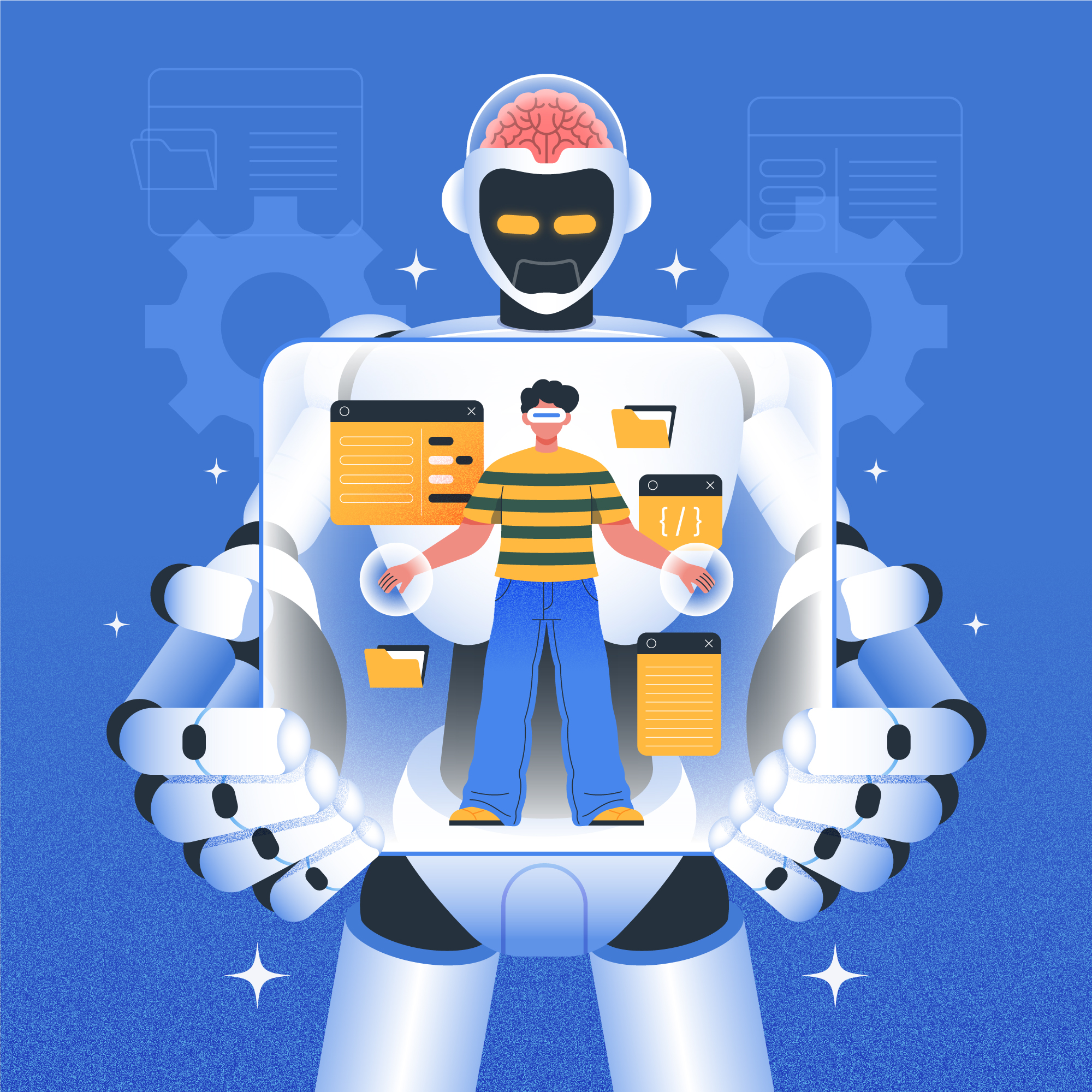
Rather than replacing humans entirely, AI is more likely to come a important tool that enhances mortal productivity.
This conception is frequently appertained to as mortal- AI collaboration.
In numerous diligence, AI handles repetitious or data-heavy tasks while humans concentrate on creative thinking, strategic planning, and complex decision- timber.
For illustration
Croakers use AI to dissect medical images but make the final opinion.
fiscal judges use AI to dissect request data but develop investment strategies.
pens use AI tools for exploration or editing while maintaining creative control.
This cooperation between humans and machines can lead to advanced effectiveness and better issues.
Chops That Will Be Valuable in the AI period
As AI transforms the pool, certain chops will come decreasingly important.
Critical Allowing
The capability to dissect information, estimate options, and make sound opinions will remain precious.
Creativity
Creative thinking helps induce new ideas, break problems, and introduce.
Emotional Intelligence
Understanding and managing feelings is essential for cooperation, leadership, and client connections.
Rigidity
Technology evolves fleetly. Workers who can acclimatize and learn new chops will be more set for unborn changes.
Digital knowledge
Understanding how to use digital tools, including AI technologies, will come a introductory demand in numerous professions.
Preparing for the Future of Work
While AI’ll change the job request, individualities and associations can take way to prepare.
Lifelong literacy
nonstop education and skill development will be pivotal. Online courses, professional instruments, and training programs can help workers stay applicable.
Reskilling and Upskilling
Workers in vulnerable diligence may profit from reskilling programs that prepare them for new careers in technology- driven fields.
Government and Policy Support
Governments can support pool transitions by investing in education, job training, and social safety programs.
Responsible AI Development
Companies and experimenters must insure that AI technologies are developed immorally and responsibly.
The Future of Work in an AI World
The future of work will probably look veritably different from moment’s job request.
rather of replacing humans entirely, AI’ll reshape diligence, change job liabilities, and produce new openings.
numerous jobs will evolve rather than vanish. Workers may spend lower time on repetitious tasks and further time on creative, strategic, and interpersonal work.
The relationship between humans and technology will come decreasingly cooperative, with AI serving as a important tool that enhances mortal capabilities.
The fear that artificial intelligence will replace all mortal jobs is accessible but largely exaggerated. While AI’ll automate certain tasks and disrupt some diligence, it’ll also produce new openings and transfigure being places.
History shows that technological invention frequently leads to both job losses and job creation. AI is likely to follow this pattern by reshaping the pool rather than barring it.
The key to thriving in an AI- driven world is rigidity. individualities who embrace lifelong literacy, develop precious chops, and learn how to work alongside AI’ll be well- deposited for the future.
Rather than viewing AI as a trouble, it may be more productive to see it as a tool that can enhance mortal implicit and open new possibilities for invention, productivity, and growth.
As artificial intelligence continues to evolve, the future of work will depend not only on technology itself but also on how society chooses to use and manage it.